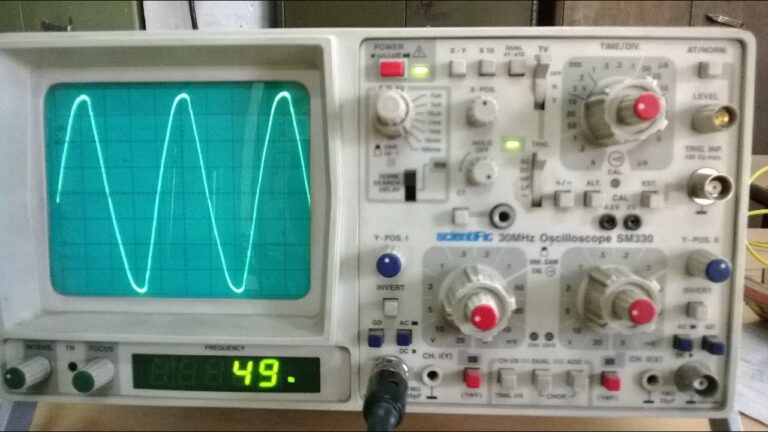
Introduction to Electronic Oscillators
An electronic oscillator is a circuit which can produce alternating voltage i.e. AC voltage from DC voltage like battery. It consists of semiconductor devices like transistor, MOSFET, etc.

Learn the fundamentals of electronic oscillators from scratch! Complete details of oscillator circuits with working, circuit diagram and formulae.
An electronic oscillator is a circuit which can produce alternating voltage i.e. AC voltage from DC voltage like battery. It consists of semiconductor devices like transistor, MOSFET, etc.
In LC oscillators, combination of inductor (L) i.e. coil and capacitor (C) are used. When we connect inductor (L) in parallel with capacitor (C), this combination is called tank circuit. We shall understand the working of tank circuit first.
The RC Phase shift oscillator uses common emitter configuration i.e. CE configuration of transistor. It produces 180° phase shift in addition to the phase shift of 180° by the transistor. So we get total 360° phase shift to produce positive feedback.
The Wien Bridge Oscillator circuit is an RC oscillator which uses the basic property of Wien Bridge Circuit. It uses to stage amplifier circuit and leading-lagging RC network, as shown in the following block diagram.
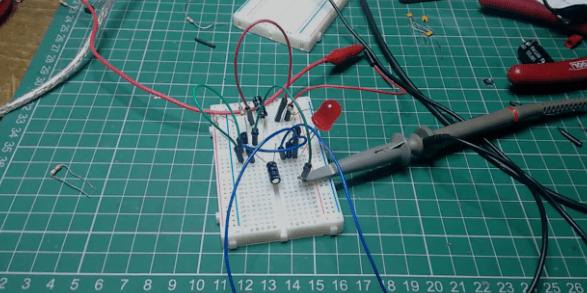
In previous circuit of Hartley oscillator, we used two coils L1 and L2 and one capacitor C. But in this circuit of Colpitt’s oscillator, we use two capacitors C1 and C2 with a single coil L. Let us discuss about this circuit.
In Hartley Oscillator, the combination of L-C is used to produce high output frequency. It consists of one transistor, a tank circuit and the positive feedback to produce oscillations. Its circuit diagram is given below.