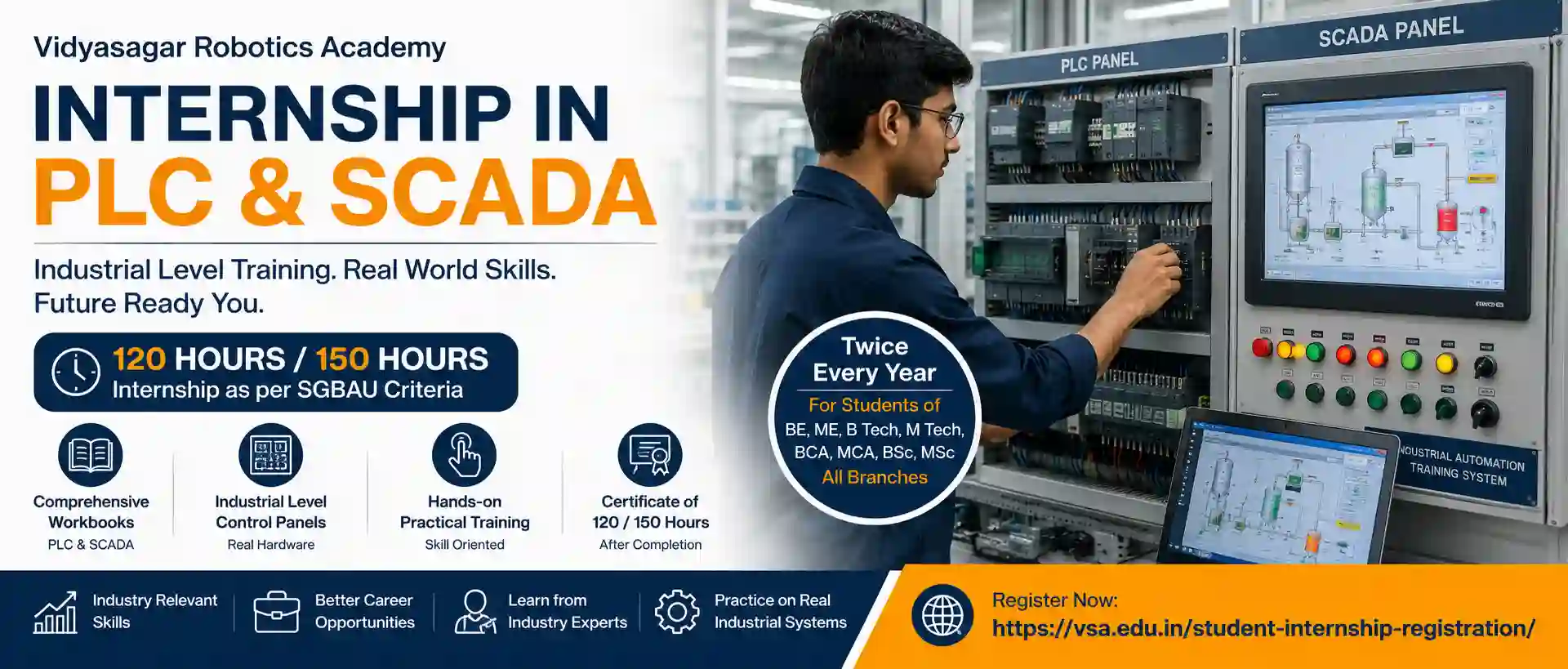

A 120/150-hour hands-on internship designed to build practical competence in industrial automation and control.
Internship Programs available in:
PLC & SCADA | IoT & Data Science | Machine Learning & Neural Networks | VLSI Technology | Full Stack Web Development | Advanced CAD 3D Printing | Cloud Computing with Azure.
Contact for details: +91 99-60-991-991
Page Contents
show
Introduction
Industrial automation is no longer confined to large manufacturing plants. Programmable Logic Controllers (PLCs), Supervisory Control and Data Acquisition (SCADA) systems, sensors, industrial communication networks and automated control panels are now widely used in manufacturing, utilities, process industries, infrastructure, laboratories and modern production facilities. For engineering, computer science and technology students, understanding these systems only through theory is not enough. They need the opportunity to wire, program, test, troubleshoot and operate real control systems. With this objective, Vidyasagar Robotics Academy (VRA) conducts its Internship Program in PLC & SCADA twice every year for students who want genuine hands-on exposure to industrial automation.
Who is eligible?
The internship is open to students of BE, ME, B.Tech, M.Tech, BCA, MCA, B.Sc. and M.Sc. from all branches and specializations. This broad eligibility is intentional. Modern automation is multidisciplinary: electrical and electronics students may approach it through control wiring and instrumentation; mechanical students through machines and processes; computer science and IT students through programming, networking, data acquisition and visualisation; and science students through measurement, sensors and analytical applications. The programme therefore begins with the fundamentals and gradually develops the skills required to understand a complete PLC-SCADA system.
What you will learn?
The programme is structured around the internship-duration frameworks prescribed in the curricula of Sant Gadge Baba Amravati University (SGBAU), Amravati. In several SGBAU NEP curricula, On Job Training (OJT), Internship/Apprenticeship or Field Project work of 120 hours is specified, commonly carrying four credits. SGBAU also publishes programme-specific schemes in which Internship/Field Work Project activity is prescribed for 120-150 cumulative hours. Accordingly, VRA conducts 120-hour and 150-hour internship formats so that students can complete the duration applicable to their course, college and university scheme. The training hours are devoted to purposeful learning, supervised practical exercises, PLC programming, SCADA work, industrial control-panel practice, troubleshooting and project-oriented activities rather than passive attendance.
Acquire real practical skill…
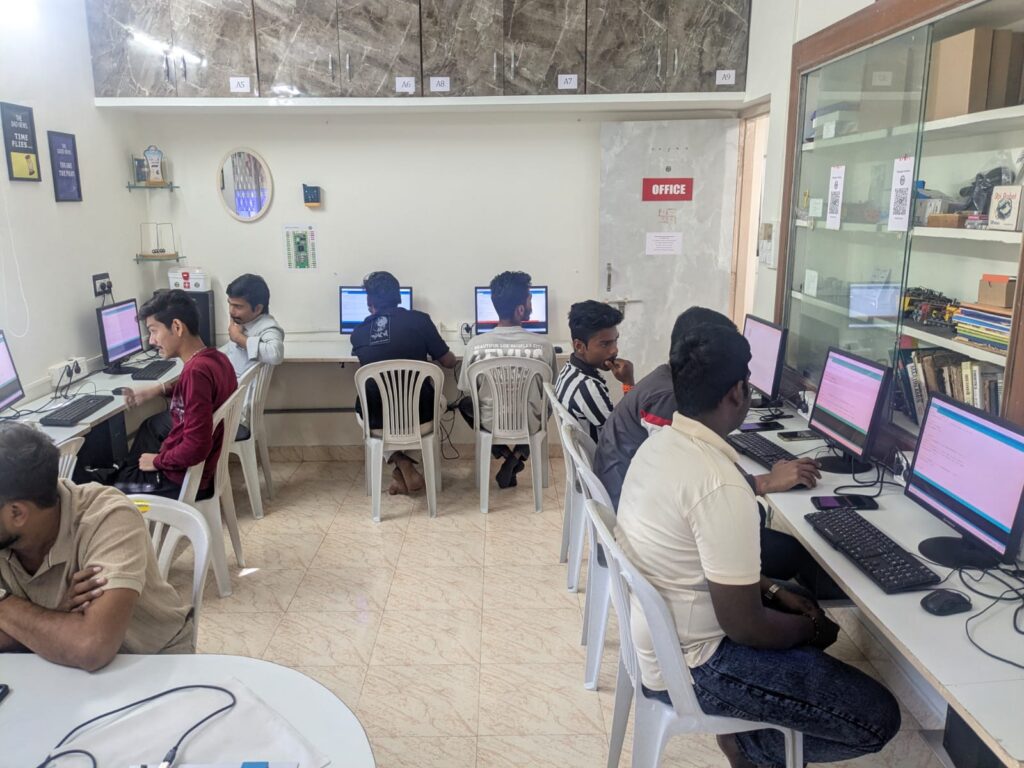
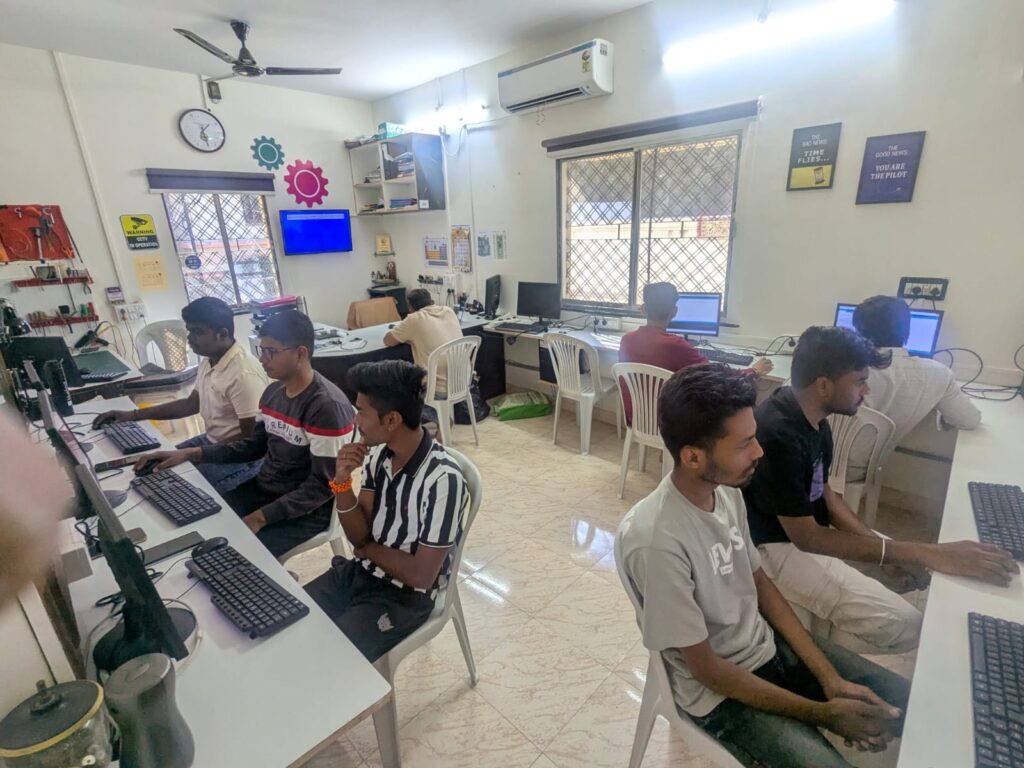
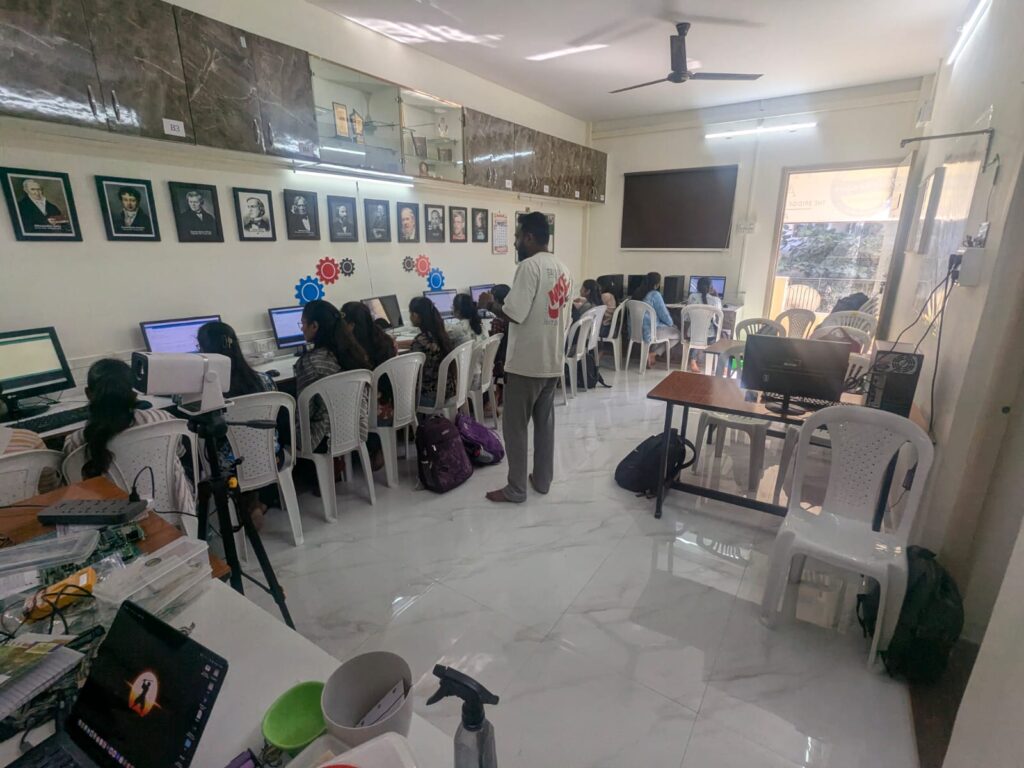
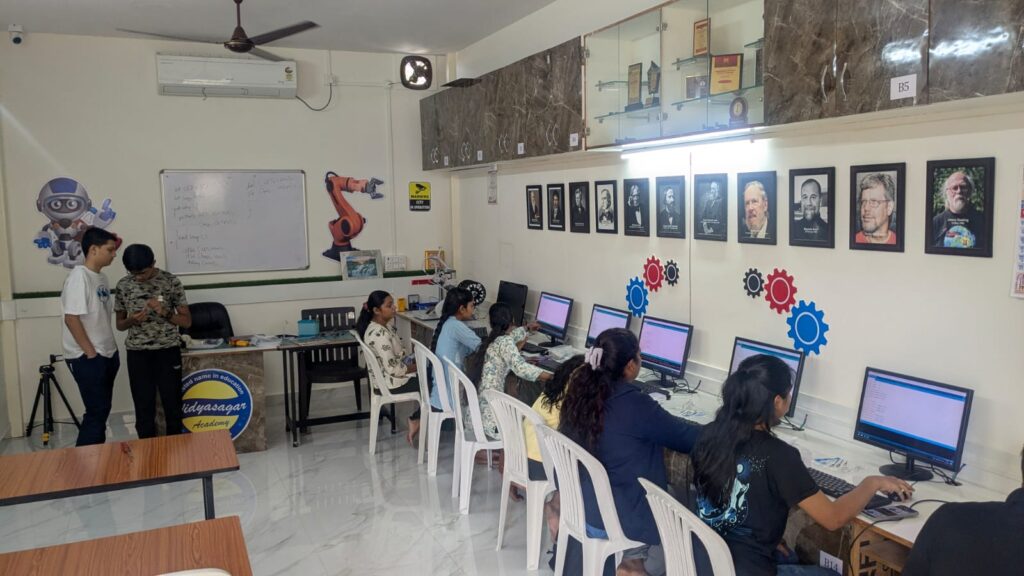
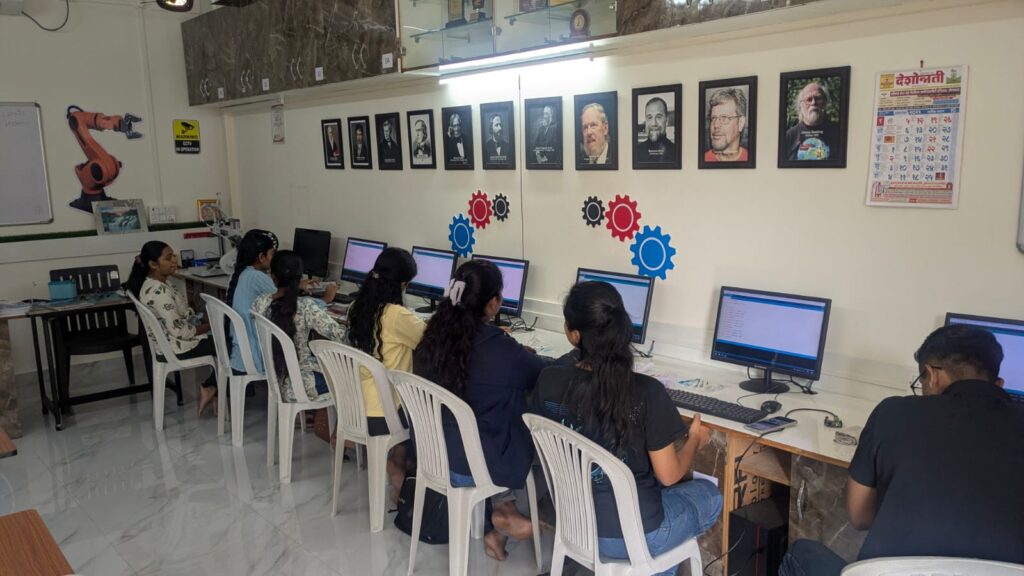
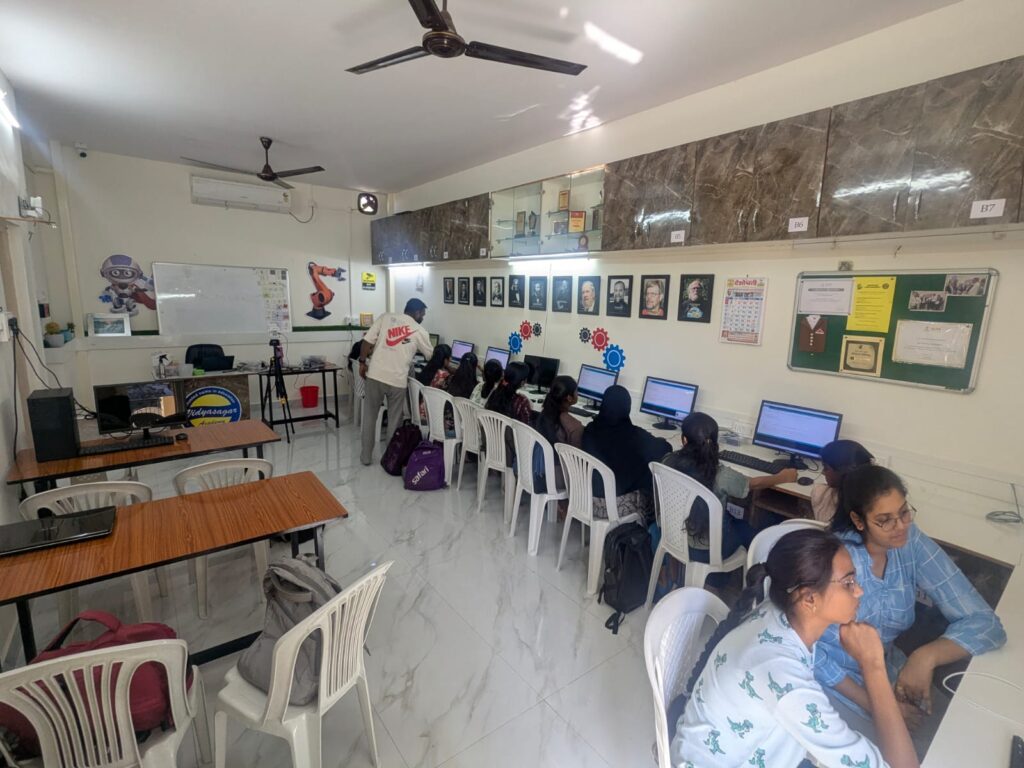
A major strength of the internship is its emphasis on real practical skill. Students work on industrial-level PLC and SCADA control panels instead of learning only through simulation software. They are introduced to the actual flow of an automation system: field input devices send signals to the PLC, the PLC executes the programmed logic, output devices are controlled, and the process is monitored or operated through a visual interface. This helps students connect the logic they see on a computer screen with the voltage, wiring, sensors, relays and devices present on the control panel.
During the internship, students progressively learn digital input and output wiring, PLC programming, timers and counters, latching and interlocking, logic operations, sensor interfacing, relay control, analog signals, process monitoring and basic troubleshooting. Depending on the batch and project scope, they also work with temperature measurement and control, threshold and hysteresis logic, data visualisation, web-based or SCADA-style operator controls, networking and practical industrial sequences. The teaching method consistently follows a simple principle: first understand the industrial requirement, then build the control logic, connect it with the hardware, test the response and diagnose any error.
What you will get…?
Every participant receives dedicated PLC and SCADA workbooks prepared for the internship. These workbooks are not merely collections of theoretical notes. They are designed as practical learning companions containing concepts, diagrams, programming tasks, observations, exercises and space for documenting results. Students can continue to use them after the internship for revision, project development and preparation for interviews or higher-level automation study. The combination of structured workbooks and direct laboratory practice also makes the learning process more systematic for students coming from different academic backgrounds.
Another important aspect of the programme is the development of troubleshooting ability. In an industrial environment, a control system is useful only when a technician or engineer can determine why it is not behaving as expected. Students are therefore encouraged to check wiring, input status, PLC logic, output conditions, sensor behaviour and communication settings methodically. This diagnostic approach builds confidence and helps transform a student from a software user into a practical problem-solver who understands the complete signal path from the field device to the control program and the operator interface.
Internship twice every year…
The internship is conducted twice every year so that students can plan it around their academic calendar and vacation periods. The batch-based format also allows participants to work under close supervision, discuss problems with instructors and learn from one another while completing practical tasks. For colleges and departments, the programme can serve as a focused industry-oriented internship opportunity that supplements the regular curriculum with laboratory exposure to technologies widely encountered in automation and control engineering.
On successful completion of the prescribed programme, every student receives a Certificate of Internship clearly indicating completion of 120 hours or 150 hours, as applicable to the student’s academic requirement and the internship batch. More importantly, the student completes the programme with practical exposure that can be demonstrated: understanding a control panel, interpreting input and output signals, creating PLC logic, operating a SCADA or web-based control interface, and testing a working automation sequence. This demonstrable ability is the central purpose of the internship.
For students who want to move beyond textbook descriptions and experience how industrial automation actually works, the PLC & SCADA Internship at Vidyasagar Robotics Academy provides a structured route from fundamentals to real control applications. It is designed not simply to add an internship certificate to a file, but to build confidence, practical discipline and a strong foundation for future projects, employment and advanced study in automation, robotics, instrumentation, industrial IT and related fields.
Interested students can register for the PLC & SCADA Internship at: https://vsa.edu.in/student-internship-registration/
Important academic note: SGBAU internship/OJT requirements are programme-specific. Students should verify the exact duration, credits, semester and documentation required for their own degree programme and college. The official SGBAU references below are provided so students and institutions can check the university source directly.
Official SGBAU references for verification
- 120-hour OJT/Internship example: SGBAU NEP curriculum states that 120 hours of On Job Training / Internship / Apprenticeship / Field Project is mandatory and carries 4 credits. Open official SGBAU curriculum PDF
- 120-150-hour Internship/Field Work example: SGBAU Gazette dated 17 April 2026 specifies an Internship / Field Work Project duration of 120-150 hours (cumulative). Open official SGBAU Gazette PDF
- Additional SGBAU Gazette example for the 120-hour OJT/Internship framework. Open official SGBAU Gazette PDF
Gallery